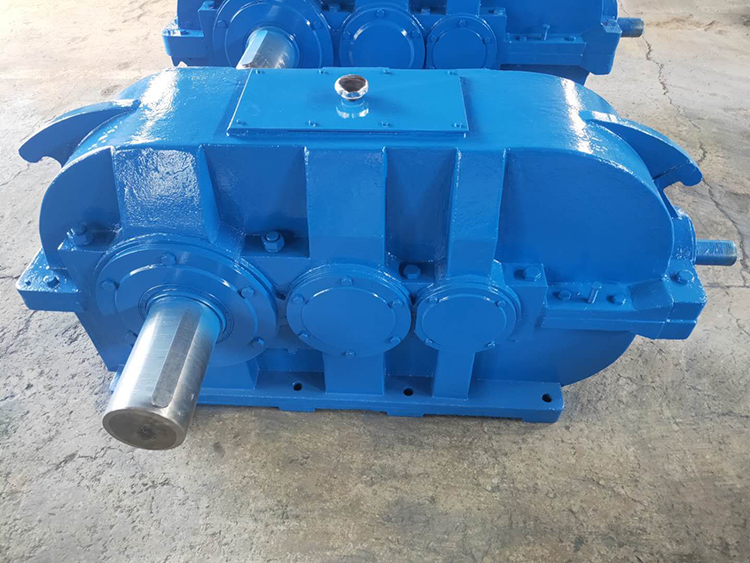

In the field of industrial transmission, DCY hard tooth surface reducer is a key equipment, and its operating status directly affects the efficiency and safety of the production line. In order to ensure the long-term stable operation of the gearbox, it is particularly important to timely and accurately determine its operating status. So, how to determine if the DCY hard tooth surface reducer is operating normally? This article will provide you with an in-depth analysis.
Firstly, visually observe the operating status of the DCY hard tooth surface reducer. During normal operation, the gearbox should be stable, without any abnormal vibration or noise. If there is abnormal vibration or increased noise, it may be caused by wear or poor lubrication of components such as gears and bearings, and it is necessary to stop the machine for inspection in a timely manner.
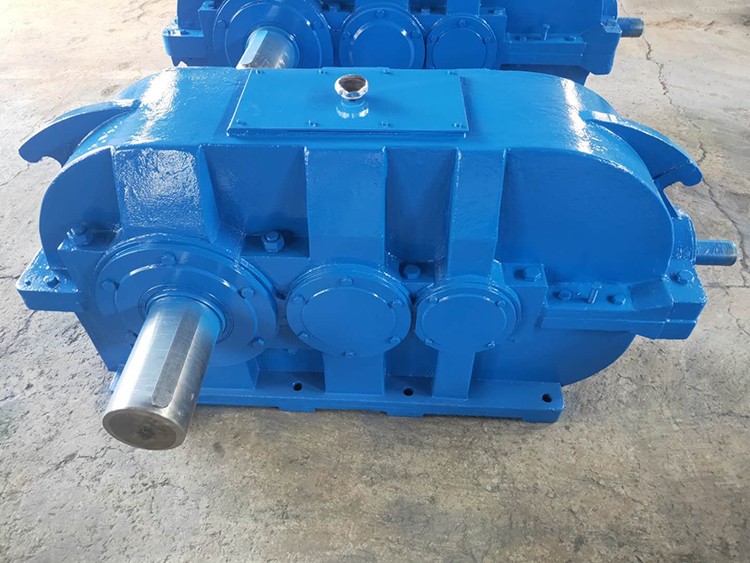
The lubrication system is the key to the normal operation of DCY hard tooth surface reducer. Regularly check the cleanliness, viscosity, and oil level of the lubricating oil to ensure that it is free of impurities, not too thin or too thick, and the oil level is within the normal range. If the lubricating oil deteriorates or the oil level is too low, it should be replaced or replenished in a timely manner. At the same time, check the sealing of the lubrication system to prevent oil leakage.
Use monitoring devices such as infrared thermometers and vibration sensors to monitor the temperature and vibration of the DCY hard tooth surface reducer in real time. During normal operation, the temperature of the gearbox should fluctuate within the allowable range and the vibration amplitude should be stable. If the temperature rises abnormally or the vibration amplitude suddenly increases, it may be caused by internal component failure or poor lubrication, and the machine should be stopped immediately for troubleshooting.
By collecting and analyzing the operating data of DCY hard tooth surface reducer, such as input power, output torque, speed, etc., its operating efficiency and performance can be evaluated. If there are abnormal fluctuations or deviations from normal values in the operating data, it may be due to a fault in the gearbox or the need for adjustment and maintenance.
Regularly inspect the appearance and connecting components of the DCY hard tooth surface reducer, such as the housing, bearing seat, coupling, etc. Ensure that the appearance is free of cracks, deformations, or corrosion, and that the connecting components are securely fastened. If any abnormalities are found, they should be repaired or replaced in a timely manner.
 Address:Zibo, Shandong
 WhatsApp:+8615805335335
 Wechat: +8615805335335
  E-mail:zs@sdsmachinery.com
Hard tooth surface reducer manufacturer: The company produces various types and specifications of reducers such as ZQ reducers, shredder reducers, MBY edge drive grinder reducers, HB high-power reducers, etc